Mové San
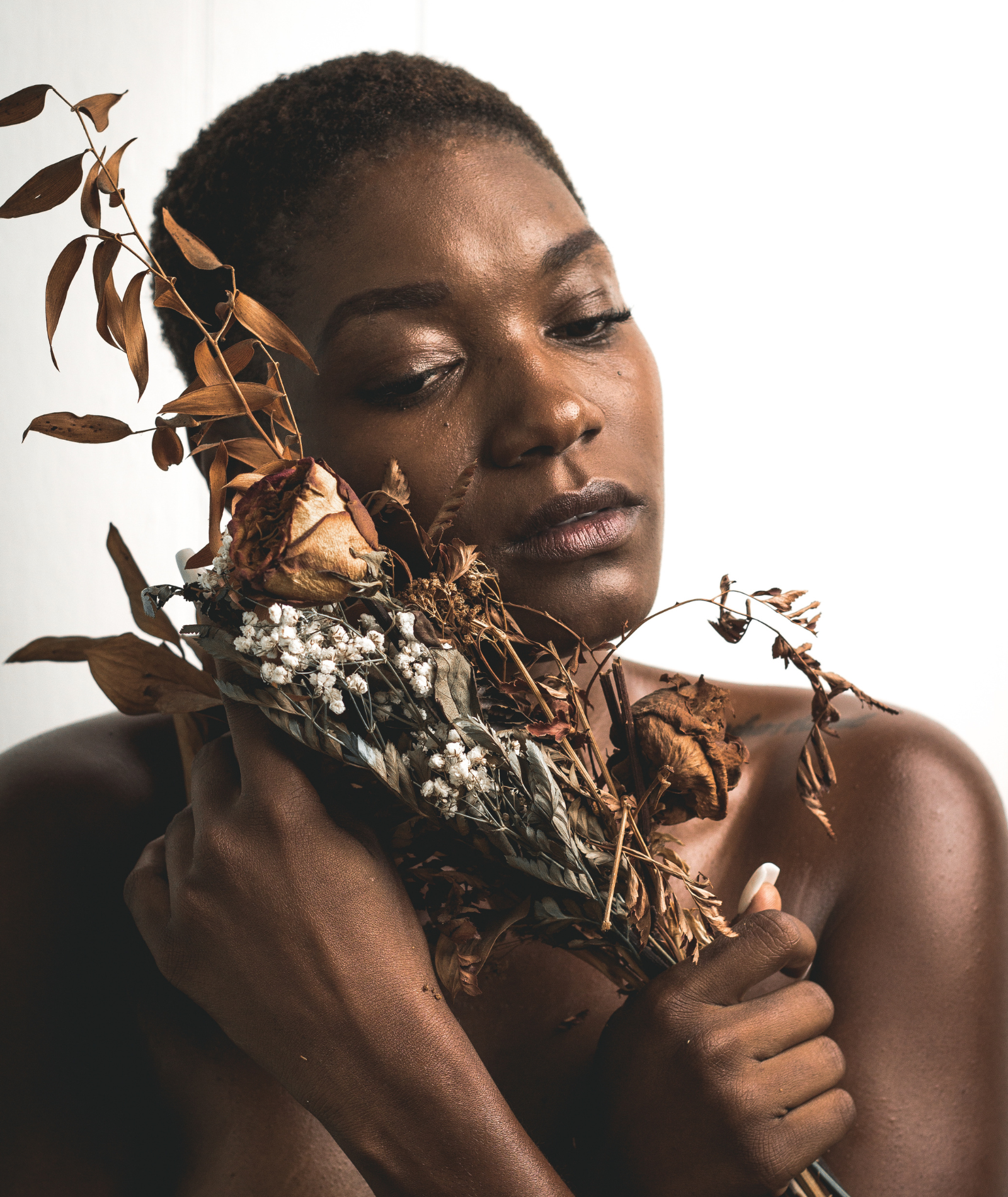
Photo by Zayne Airall, Intersect Antigua-Barbuda.
eské ou jamn fè mové san
It was early Spring 2023, and I sat in the car with my mother—our eyes facing forward, feeling each other’s presence in the space. It had been almost a year since I came out to her and I was feeling both surprised and grateful to be in that moment.
It wasn’t that I didn’t understand the Haitian-creole turn of phrase—move san. In fact, it’s one I’d heard often. The first time was shortly after my grandfather (Papi Damyen) passed away. I was seven, having never witnessed grief before and woefully unaware of how demonstrative it could be. In a household where emotions were better off kept at bay, where anger was loud and destructive and joy heavily guarded out of fear it’d be stolen away, I was suddenly exposed to the polarizing moods grief brings. I remember waking up one night to my mother’s wails and tip-toeing through the bathroom that connected our rooms to find her on the other side, collapsed and vulnerable in the arms of my father.
The next day, she laughed with her sisters as they fussed about who would take the children to the mall to get their outfits for the repass. We caravaned to the Livingston Mall, and the sisters spent what seemed like hours scouring Macy's for the perfect dresses for the girls and wide-brimmed hats—each secretly trying to outdo the other like just another Resurrection Sunday. My uncle took the boys for fresh dress shirts and ties and, when his style proved to be underwhelming, my mom pulled us out of school early the next day to do it all over again. Her sudden proclivity for fashion, paired with the unanticipated privileges of skipping school, painted a picture of grief for me, marked with strokes of excitement and celebration. That evening, my cousins and I sat quietly at the kitchen table, forcing down the mounds of food being flung in our direction—eager to escape to the backyard where we had paused our latest playground adventure. The next day, she missed my dance recital, and I sat in tears as my dad tried unsuccessfully to wrestle my hair into the silk-tight bun our studio required of all dancers, no matter our hair texture – reminding me that maybe “excitement” and “celebration” was just part of the coping.
All of my aunties acted in ways I’d never seen before—their grief spilling loudly onto the floors of funeral parlors, the tables of family cookouts, and the dressing rooms of shopping malls. In hushed voices, they would take turns accusing one another of move san. I understood move to mean “bad” and that was enough to place it in a category of my brain where I looked at the phrase with disdain. “bad without,” “bad blood,” “bad spirit,” there were many ways to interpret it but what I knew for sure was this: Move san was scary and unpredictable; loud and inconsistent; a reason to look on another with pity. A state of childlike tantrum. It was something I became sure I never wanted to encounter.
As I got older, my mom would claim move san following an argument with my brother or when I rebelled against what I viewed as her tight grasp on my sovereignty. We didn’t always understand each other, and I know she didn’t expect me to turn out the way that I did: kind of like her…but with a dash (or maybe a heapful) of queer.
My mom would sometimes share stories of her childhood in Ayiti, and one of my favorite ones to this day is about how she fought tooth and nail to go to school. As the eldest daughter in a family of eight, with her father frequently on the road making money to send home, she was thrust into the role of caretaker, cook, agriculturalist, and market-woman (i.e. mom #2). When it came time for school to start, she would see her younger siblings off and be sent back home or to her aunt’s to work. Every year, she would beg and plead with her parents to go to school before finally being allowed to begin her studies months after her peers. One year, knowing she was to be sent back to her aunts’ house to work again, she finally reached a breaking point and ran away from home. She walked over 2 hours from her rural mountain home into Port-Au-Prince before being recognized by a market-woman acquainted with her mother, who eventually sent for her to be brought back home. It was the worst trouble she’d been in in her life. When her father arrived home later that night, she finally broke down to him, explaining not only her desire to go to school but the abuses she faced working in her aunt’s home. To her surprise he listened, and she was finally able to access an education in the same way as her siblings.
I love hearing my mom tell this story because it gives reason to the way I am—to my persistence, my stubbornness, my way of intending on doing exactly what I will be doing and doing it. I don’t know if my mom realized it at the time, but with every relaying of that story, she was growing not only my sense of pride and dignity, but also my sense of rebellion and r/evolution. She was demonstrating to me what it means to fight back against a status quo in pursuit of something more freeing. But while her definition of freedom involved immigration, electricity, running water, education, and the good ole’ bootstrap philosophy, I had been born in the same amerikkka that killed Abner Louima in cold blood and hadn’t stopped to say his name. I had been raised on stories of the Haitian Revolution and fortified by the mysticism and foods of my ancestors. I was begotten from the evidence that my grandfather, a stubborn patriarchal man who was raised with traditional values could embrace a moment of pause and softness to hear his daughter speak and to choose a different way. My mother perhaps didn’t realize at the time exactly what she had created.
And so, despite our similarities in character and the deep admiration and love I hold for her, we have always had a hard time understanding each other. It often felt easier and safer to just hide the person I was becoming.
By the time I came out to her, I think I had already transformed into a bit of a stranger before her eyes. Each time I would visit home from whichever new school, job, or state I was in, I would become a little more distant…a little colder… a little more “educated” on the historic ills and oppressions of society…a little less patient…a little more resentful of my need to mask. It didn’t help that I had simultaneously begun adorning my exterior with new tattoos, hairstyles, and piercings. All the while, we would never talk about what was going on or what we needed. Maybe it was that we never could. I think my mom made one last-ditch effort to try and bridge the rift that had built between us.
“I had been raised on stories of the Haitian Revolution and fortified by the mysticism and foods of my ancestors.”
Right at the onset of the COVID-19 pandemic, she suddenly took on travel nursing and travelled across the country to take a post within an hour of me. I rejected this attempt in a way that I feel ashamed of today. I was in the early stages of my healing journey, where I was recklessly eager to finally push back on the ways my mother showed up as controlling and overprotective, to react to the long-held generational trauma my body was holding, to “speak my truth,” and to “set boundaries.” I have come to learn that as a second-generation, queer daughter of immigrants, the western-liberal way of healing is not my way. But I didn’t know that at the time and pushed my mother even further from me.
So by the time I picked up the phone to call her in the Summer of 2022 the shock she experienced almost broke us. In fact, it had for more than half the year. By the time I picked up the phone to call her in the Summer of 2022, to finally tell her who I am, I couldn’t also tell her about how I had dug myself into a financial hole that left me struggling to meet my basic needs; or how I had lost so many friends and was starting to believe that I was the problem; or how my anxiety had become so crippling that I couldn’t remember the last time I’d gotten a full night’s sleep; or how I thought maybe I had found the love of my life but wasn’t sure if we would make it; or how scared I was of everything I was striving for and what it could bring. By the time I picked up the phone to call her in the Summer of 2022, to finally tell her who I am, it was because I couldn’t hold anymore, and my body was aching to let something go. So I did. And it almost broke us. And though my mother didn’t speak to me for months to follow, I would hear about her: finding solace in community, seeking out therapy for the first time in her 68-year-old immigrant life, moving through the polarizing moods she was holding. I did the same.
“I have come to learn that as a second-generation, queer daughter of immigrants, the western-liberal way of healing is not my way.”
eské ou jamn fè mové san?
It was early Spring 2023, and I sat in the car with my mother—our eyes facing forward, feeling each other’s presence in the space. It had been almost a year since I came out to her, and I was feeling both surprised and grateful to be in that moment.
Through early adolescence and adulthood, I had taken the phrase to mean “throwing a tantrum” and always reacted with disdain.
But I’d learned stillness that year. I’d sat with doubt. And so, to be sure, I asked:
what do you mean by that?
you know like, when you go through a hardship and you feel really down.
Silence.
Mové san. An embodiment of grief. Felt and understood only by those experiencing it in the moment who know that they are, in fact, “bad without” the ones they love; whose nervous system remains so unsettled that their being do, in fact feel like they are pulsating with “bad blood;” whose spirit is no good…
Mové san. she had asked.
An acknowledgement. And in that same moment, I felt an unexpected release. An opening of my heart to something that the dizzying pain of the past 3 years had barricaded shut. A release of everything that I had been choosing to hold.
I like to believe that in that same moment my mother saw me—just as her father had seen her all those years ago. It certainly wasn’t a question she ever thought she’d have to ask her child.
But she’d learned temporality that year. She’d sat with doubt. So she built up the courage to try again to push past the walls I’d built. It was clear she had finally prepared her heart to accept her own mortality—to accept the pain of knowing she could not protect me from everything this life has in store for me.
And when my silence revealed my answer, she was ready to teach me how to heal from it as she had many times before.
Still and forever a caretaker, a cook, and an agriculturalist. (i.e. mom).