Responding from the Hills
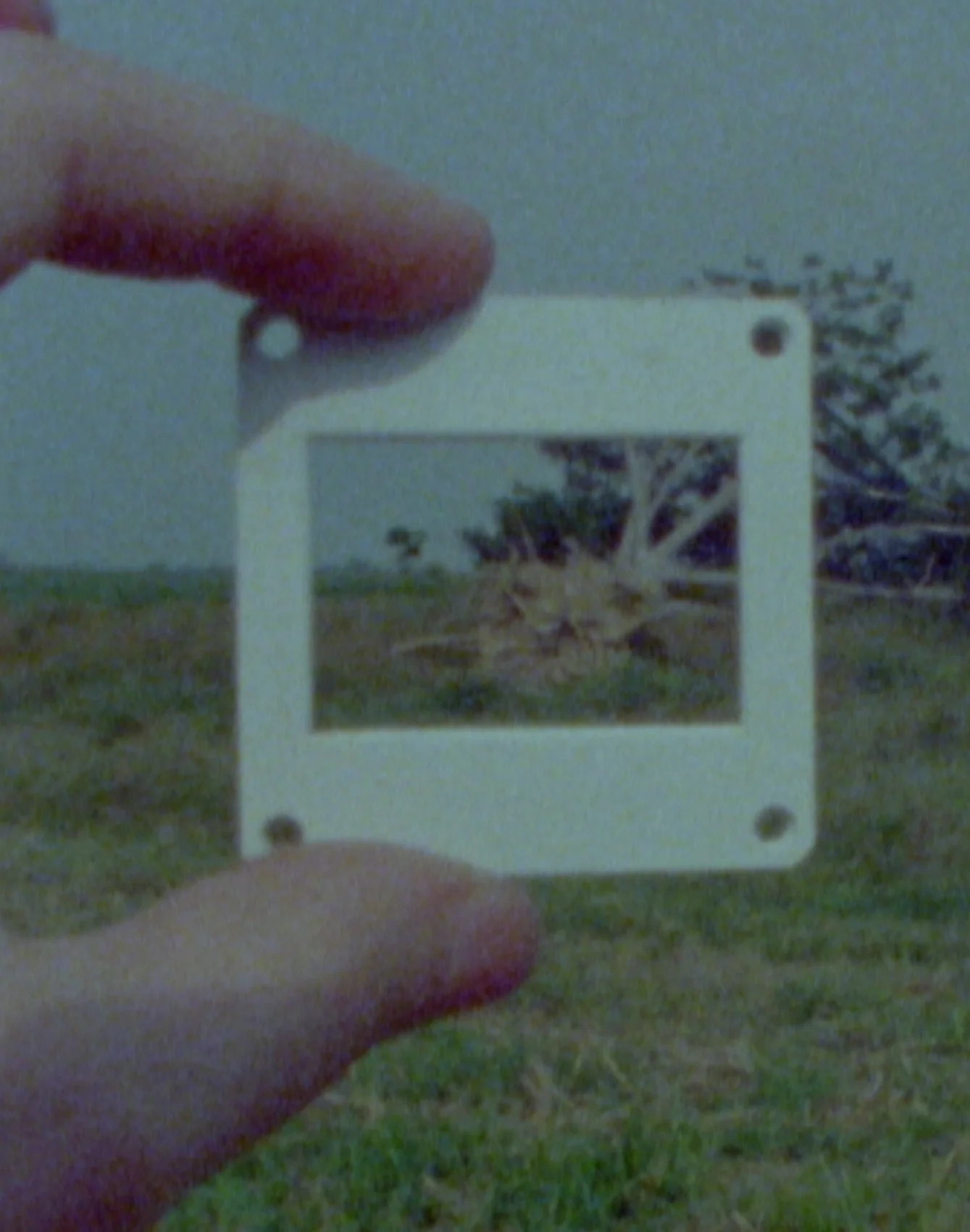
Still from A Faded Tropic. Dir. Valentina Alvarado Matos, 2016.
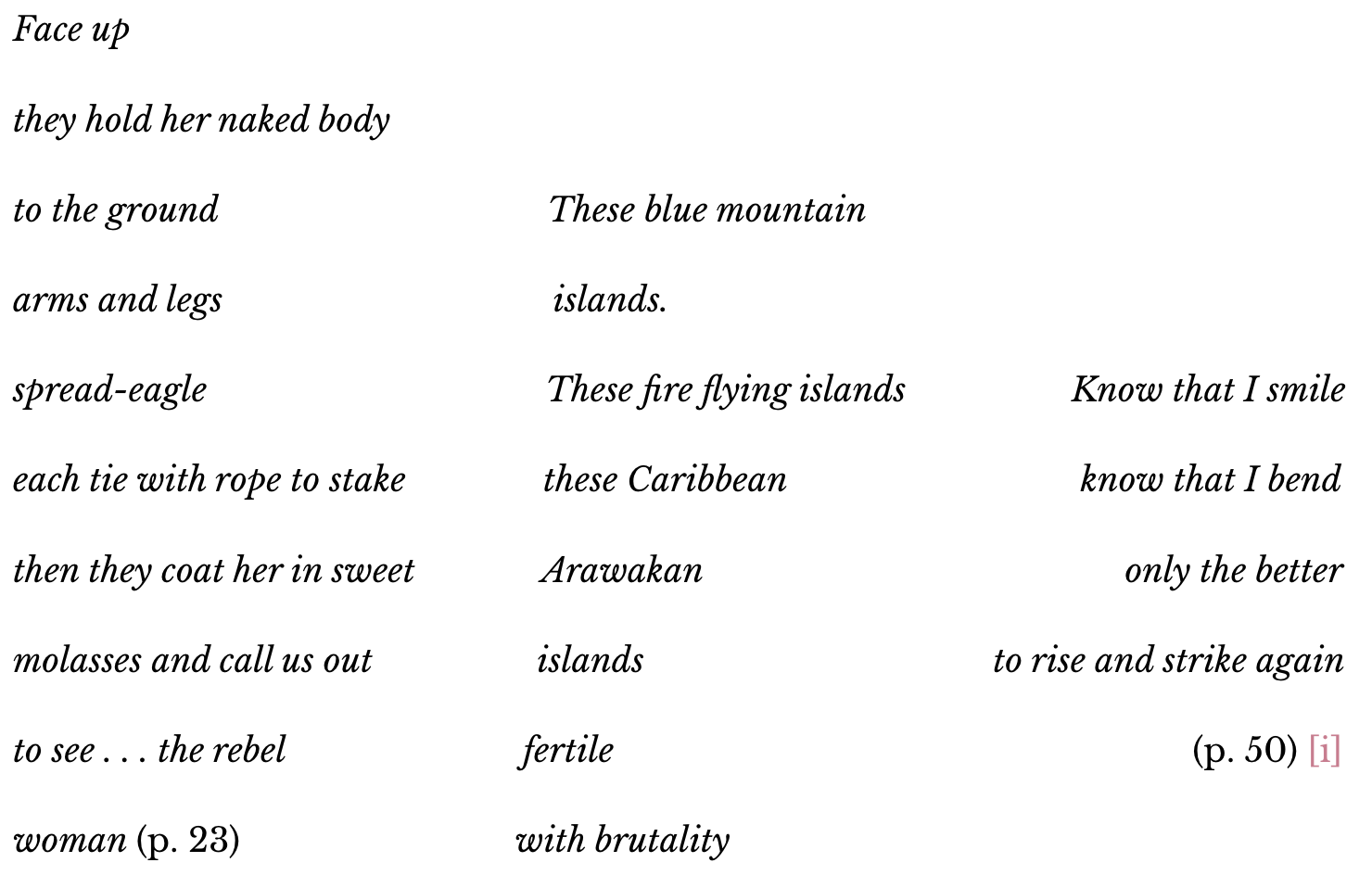
In January 2026, as threats and military attacks by the United States were escalating across the Caribbean, I found myself asking a question that was at once political and cinematic: how can one respond to a situation like this through images? What can cinema do in the face of bombardment, militarization, and the renewed assertion of imperial power over Caribbean territories and waters? In February, France 24 [ii] reported that eleven people had been killed in a U.S. attack in the Caribbean amid growing concern among fishing communities whose lives and livelihoods were being placed at risk by the military operations. These deaths belonged to the families, the territory, and everyday forms of life whose histories have long been shaped by foreign intervention, extraction, displacement, and violence.
In the midst of this uncertainty, “Responding from the Hills: A Cine-Geography of the Caribbean” was an invitation to become the 2026 annual film cycle of Instituto Cervantes, invited to circulate over the course of the year through its centers in New Delhi, Albuquerque, Athens, Chicago, Dakar, London, San Juan de Puerto Rico, and Rome—and, hopefully, through many more islands and mountains. The invitation offered me a possibility to think through cinema as a practice of response: a way of returning to a sensitive relation at a moment when the political present attempts to make specific lives and histories disappear.
The program emerged from the question: how might a curatorial practice respond to the present by returning to the everyday? Rather than beginning with a panoramic history of Caribbean cinema, I wanted to listen for the gestures through which territory is remembered and inhabited. The program moves along four paths: listening to images; tracing departure, return, and the family that remains; walking through landscapes that hold the memory of displacement; and attending to the gesture as a form of ancestral transmission. These are not fixed categories but ways of looking, returning, and listening.
The practice of female filmmakers mainly living in the diaspora—brought together in the program—illuminates these forms of inhabitation and reimagination of these expanded geographies. Their films allow us to think about the Caribbean not as a closed region, but as a living network of relations continuously remade through movement. They became a form of listening across distances and generations, while the act of programming became a way of insisting that these histories belong to the present.
This emphasis on women filmmakers is also methodological. Many of the histories through which the Caribbean has been imagined have been organized around monumental political events, male revolutionary figures, national cinemas, and institutional archives.
*
Listening to images, as proposed by Maica Gugolati in her eponymously titled film, Listening to Images, a title borrowed from Tina Campt’s seminal book [iii], allows us to enter one of the Caribbean’s constitutive dualities: creole and multiple—fragmented and porous, shaped through shared histories of displacement and colonial violence. Images exist between languages imposed through colonization and their transformations through resistance. We approach them through layers of sensibility, vibrant songs, and silences inhabited in archives for decades.
The gesture of listening to images becomes a talisman for finding light within absence. Gugolati proposes slowing down perception in order to attend to what images preserve and whisper beyond the evident: time in its materiality, minimal gestures, and affective traces that persist within bodies and landscapes. Drawing from photographic archives of Panamanian families of Antillean descent originating from Jamaica, Martinique, Barbados, Trinidad, and the Guianas, fragments emerge of the histories of those who migrated to build the Panama Canal and who later endured violent U.S. occupation and forced displacement. The political silence of disappeared photographs and the multiple losses carried within these families intertwine with the playfulness of their testimonies as they listen, many years later, to their own stories.
Still from A Faded Tropic. Dir. Valentina Alvarado Matos, 2016.
To respond from the hills is to position oneself within a symbolic and material territory where forms of knowledge, memory, and resistance continue surviving beyond the reach of imperial and supremacist logics. Throughout the Caribbean, the swamps and coastlines have historically functioned as spaces of refuge and marronage: territories where collective memory, spiritual practices, and everyday forms of survival persist despite the ongoing reconfigurations of colonial modernity; A way of looking back at history from territories historically positioned outside dominant regimes of visibility.
These films, representations of Caribbean histories, operate as gestures of response to the ongoing violences of colonialism, displacement, and imperial erasure. They approach cinema as a sensorial and political practice capable of activating relations between memory, territory, migration, and collective survival. In a moment when new forms of intervention, fear, and control coming from the Global North continue reorganizing everyday life—through restrictive migration regimes, extractive economies, militarized borders, tourism industries, environmental destruction, and cultural forms of domination—these films activate a living territory traversed by fragile memory, displacement, and gestures capable of transforming the wound.
Listening to images requires slowing down perception to attend to what exceeds visibility itself: textures, oral histories, spectral presences. Many of these images survive precariously through unstable digital transfers, subtitled copies of copies, fragmented archival preservations, or informal circulation networks sustained across diasporas. Their material fragility becomes inseparable from the political histories they carry. Scratches, interruptions, degraded sound, and missing footage reveal the journeys these images have undergone across migration, humidity, war, institutional neglect, and collective care.
*
These circulations or migrations also reveal how Caribbean cinematic histories have long existed in relation to broader tricontinental geographies linking Latin America, Africa, and the Arab world through anti-colonial struggle, militant image practices, and diasporic memory. During the 1960s and 1970s, films travelled through festivals, cine-clubs, solidarity organizations, migration routes, student movements, handwritten translations, and informal projection spaces that connected distant territories outside dominant North–South cultural infrastructures. Palestinian militant cinema, Third Cinema movements across Latin America, anti-colonial filmmaking practices in North Africa, and Caribbean diasporic image cultures all participated in wider networks of circulation through which cinema became both a political tool and space of encounter.
Many of these relations survive today only fragmentarily and are traces of dispersed terrain of unfinished solidarities. Perhaps, as film historian Aboubakar Sanogo [iv] suggests, our film histories themselves behave diasporically. Not because films merely travel and circulate, but because images carry the conditions of displacement within them. They move through informal communities, between disappearance and reappearance. To think film history diasporically means refusing stable geographies of cinema organized through institutional canons and linear chronologies. Instead, these films invite us to think through fragments and speculative relations, as well as political affinities emerging across distant territories of the Global South.
Still from A Faded Tropic. Dir. Valentina Alvarado Matos, 2016.
The works of Sara Gómez and Miñuca Villaverde—produced between the 1960s and 1970s—have a place here as constellations that continue radiating questions toward the present in a second instance. Through Guanabacoa: Chronicle of My Family, produced within the The Cuban Institute of Cinematographic Art and Industry (ICAIC) in Cuba, and To My Father, filmed from exile and in the margins of the regime, they traced cinematic pathways that contemporary filmmakers continue to reactivate today. These films unveil how memory itself is produced through displacement, weaving family into history, intimacy into politics. Departure and return dissolve into one another; the figure of the father, their island and country, and own grief become inseparable. Across the films gathered, migration rarely appears as a singular event of rupture. Instead, it unfolds as an ongoing condition through which bodies, territories, and archives continue to reorganize themselves.
Identity remains perpetually in transit.
The passage of time unsettles the very possibility of permanence.
“To think film history diasporically means refusing stable geographies of cinema organized through institutional canons and linear chronologies.”
This intimate relationship between landscape and memory unfolds across different gestures and materialities in the third act. In Wandering Song, Génesis Valenzuela evokes exile through fragile correspondences between the botanical and the domestic, where the memory of a fragmented paradise emerges almost imperceptibly before insisting with greater force. Claudia Claremi in Banana Plant transforms the cyclical care of banana trees by a Puerto Rican family living in Rochester into a ritual of diasporic continuity, where cultural inheritance survives through repetition rather than preservation. Solastalgia turns into an environmental approach for Violeta Mora for the transformation of an ecological loss as an emotional experience of inhabiting a place that has become unrecognizable.
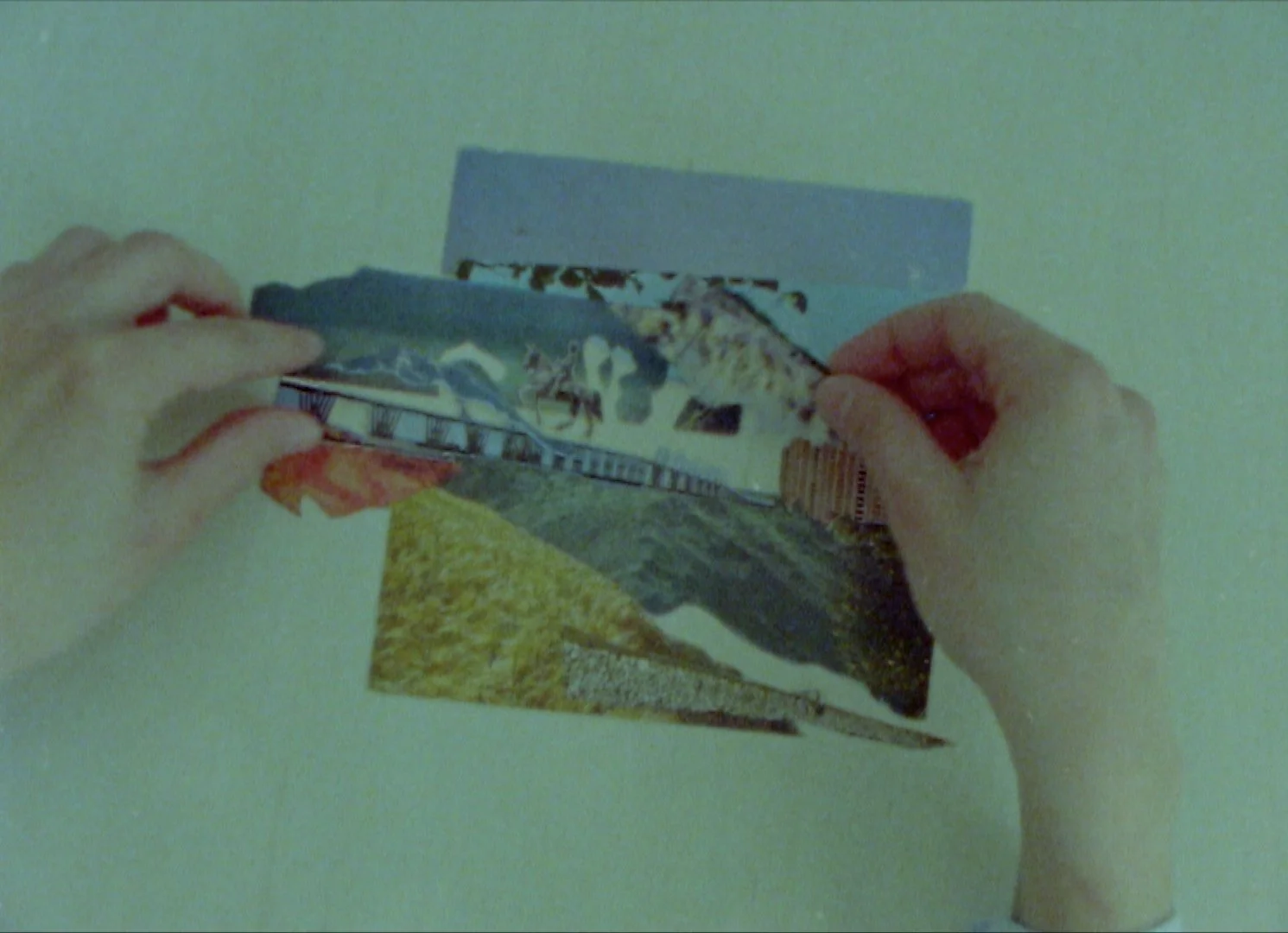
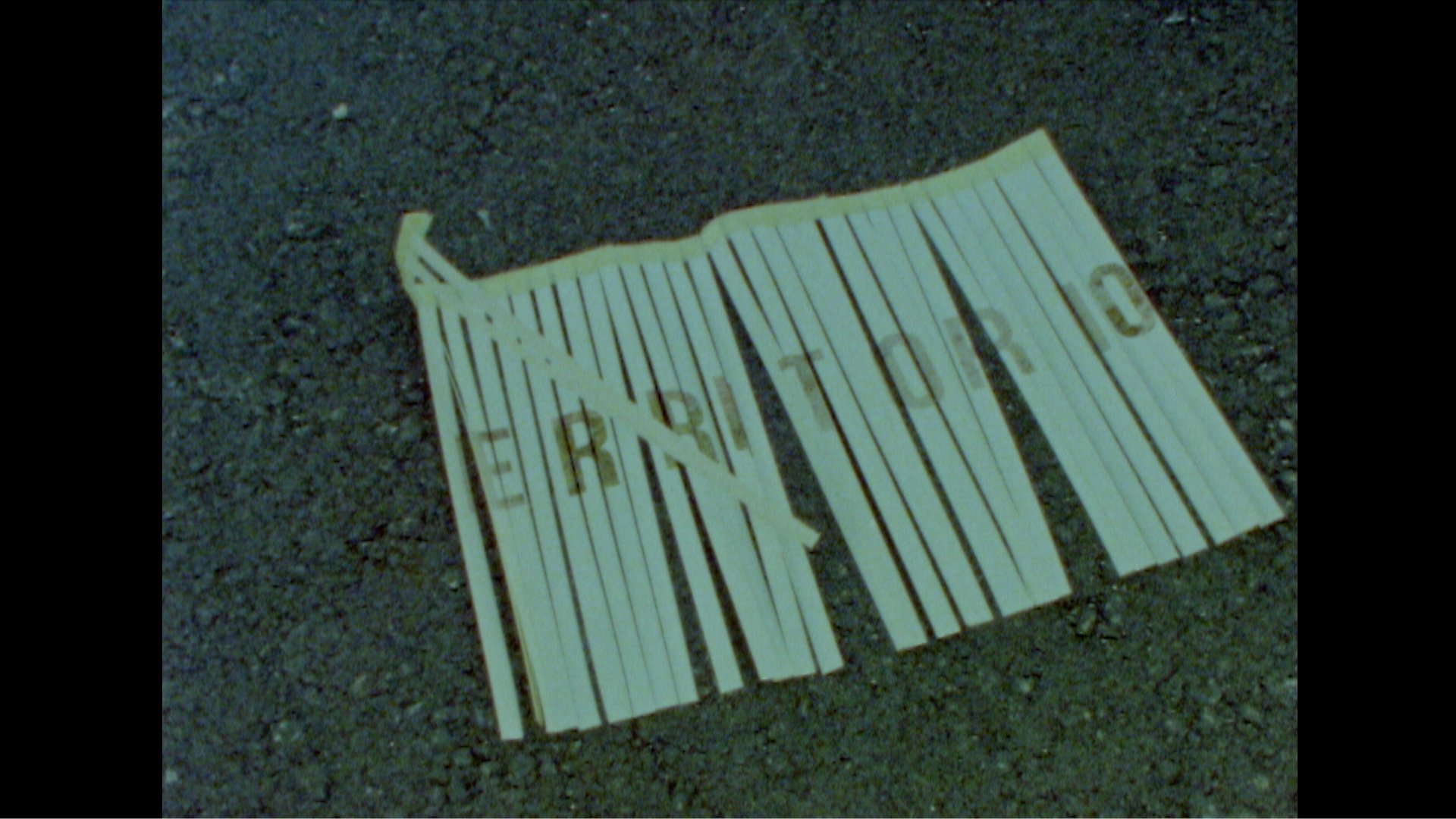
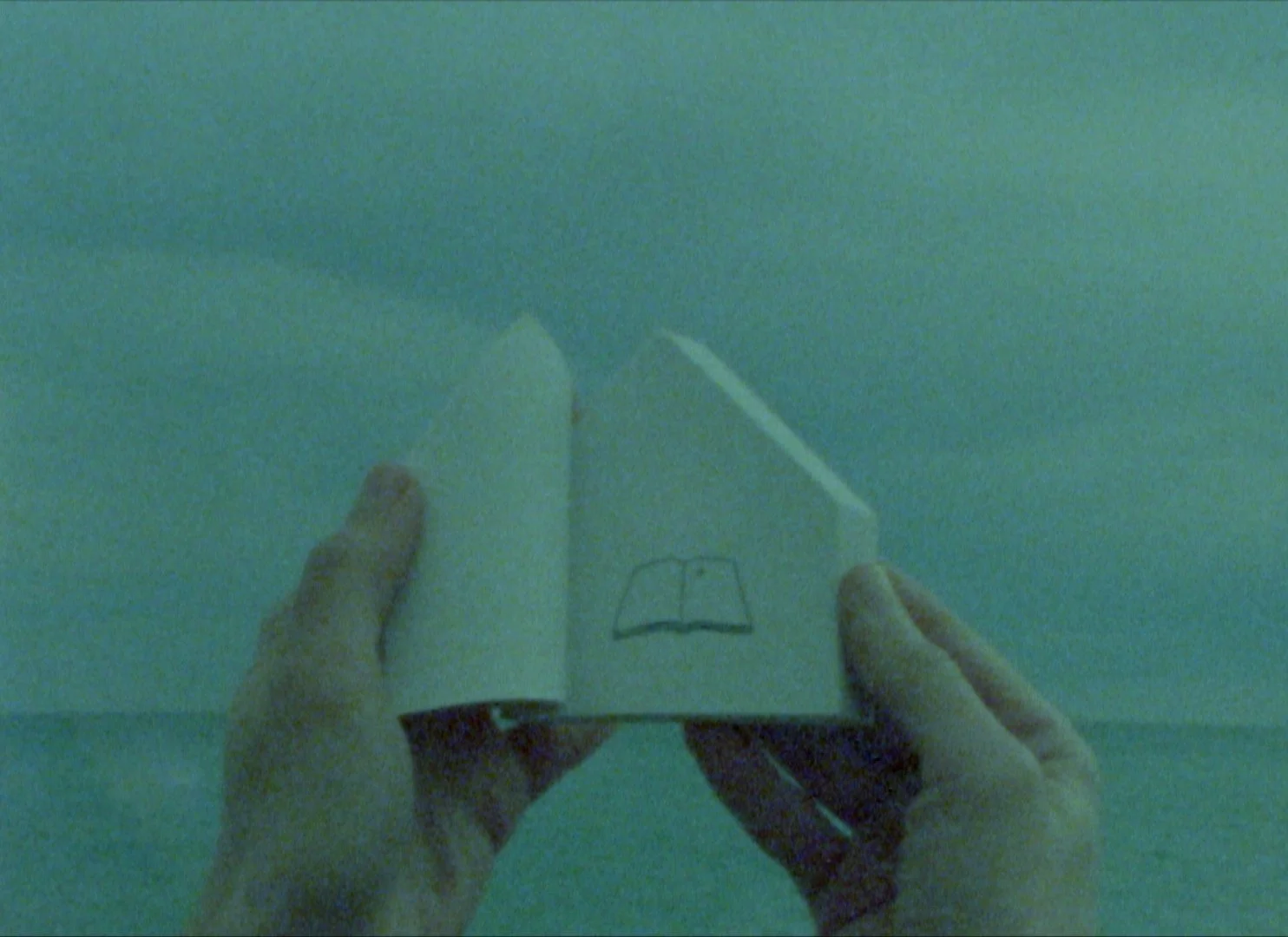
Valentina Alvarado Matos’s films portray another way of thinking about the Caribbean as a territory carried through diaspora. From the other side of the Atlantic, her hands are at the center of the exploration of reactivation of her memory of her home country, of the details and textures, as part of the living gesture. In Can You Spell the Leaf? exile unsettles the language through which a place can be remembered. She attempts, through different materialities, the remembrance of her relationship to the soil in Venezuela. A Faded Tropic proposes an association between the reenactment of her country’s colours and traces of the violence that is still being extracted today. There is a play on the possibilities of recreating home, pieces of a collage put together to assimilate its fragmented parts. In Raising an Island, territory becomes something that can be reconstructed through gesture and material practice; while putting together different sizes of stones, including ceramic stones for spaces that can’t be filled, the assembly practice of the objects raises the possibility of bringing together, and closer, an island to her side.
Movement itself becomes one of the central political gestures of these films. At dusk in Oscurana, Violeta Mora retraces the archival sounds of footsteps entering a darkness without a clear destination; it’s the journeys of Central American migrants who continue to leave home under conditions of violence and dispossession. In La Bonga, Canela Reyes and Sebastián Pinzón construct a sensorial return through the forests of the Colombian Caribbean, where a community displaced by paramilitary violence retraces the paths of a place that now survives primarily through collective memory.
Walking as a practice of survival.
Gesture, therefore, becomes both archival relation and method. Hands preparing food, gestures repeated across generations: ordinary movements which carry histories that exceed official narratives as a final and continuous act. In Ofrenda, Azucena Losana transforms tortillas, natural pigments, and the memory of grandmothers into a bridge between the domestic and the sacred. Daniela Cano and Joserraúl Ortíz reveal the handmade poetry book as a material condensation of time itself in The Making. Elena Pardo's films similarly understand fire, plants, soil, and color as living inscriptions through which bodies continue inhabiting territory. Elena Duque's Private Collection and Claudia Claremi's The Memory of Fruits extend the archive into intimate spaces where exile survives through accumulated objects, manual gestures, and affective memory. Cinema becomes a sensorial practice capable of activating relations between generations and geographies, even across the Atlantic. The archive becomes a moving territory shaped through displacement, disappearance, and circulation.
Still from A Faded Tropic. Dir. Valentina Alvarado Matos, 2016.
This intended perspective becomes especially pressing today, at a moment when colonial violence continues to oppress these geographies through extraction, displacement, and death. During the first months of 2026, renewed bombardments, military threats, sanctions, and interventions supported or orchestrated by the United States across the Caribbean basin—Venezuela and Colombia—and Latin America, have once again exposed the region’s fragile sovereignty under imperial power. Haiti continues enduring abandonment and foreign intervention. Cuba remains subjected to economic violence and sanctions. Migrant lives continue disappearing at sea while militarized borders intensify across the region. Colonial violence continues reorganizing global visibility and survival through interconnected geographies of dispossession. And in Colombia, we are in the abyss looking to far-right extreme neofascism at our door.
Perhaps this is where we must return and listen to images—those which are staring back at us. They remind us that other infrastructures of solidarity exist in more powerful ways than individuality. When archives cease being treated as isolated repositories and begin weaving themselves across geographies, coastlines, and diasporas. When circulation itself becomes a form of memory. And, when distant images begin recognizing one another again through the repetition of gestures in relation and resistance, “to smile, and to rise and strike again.” [i]
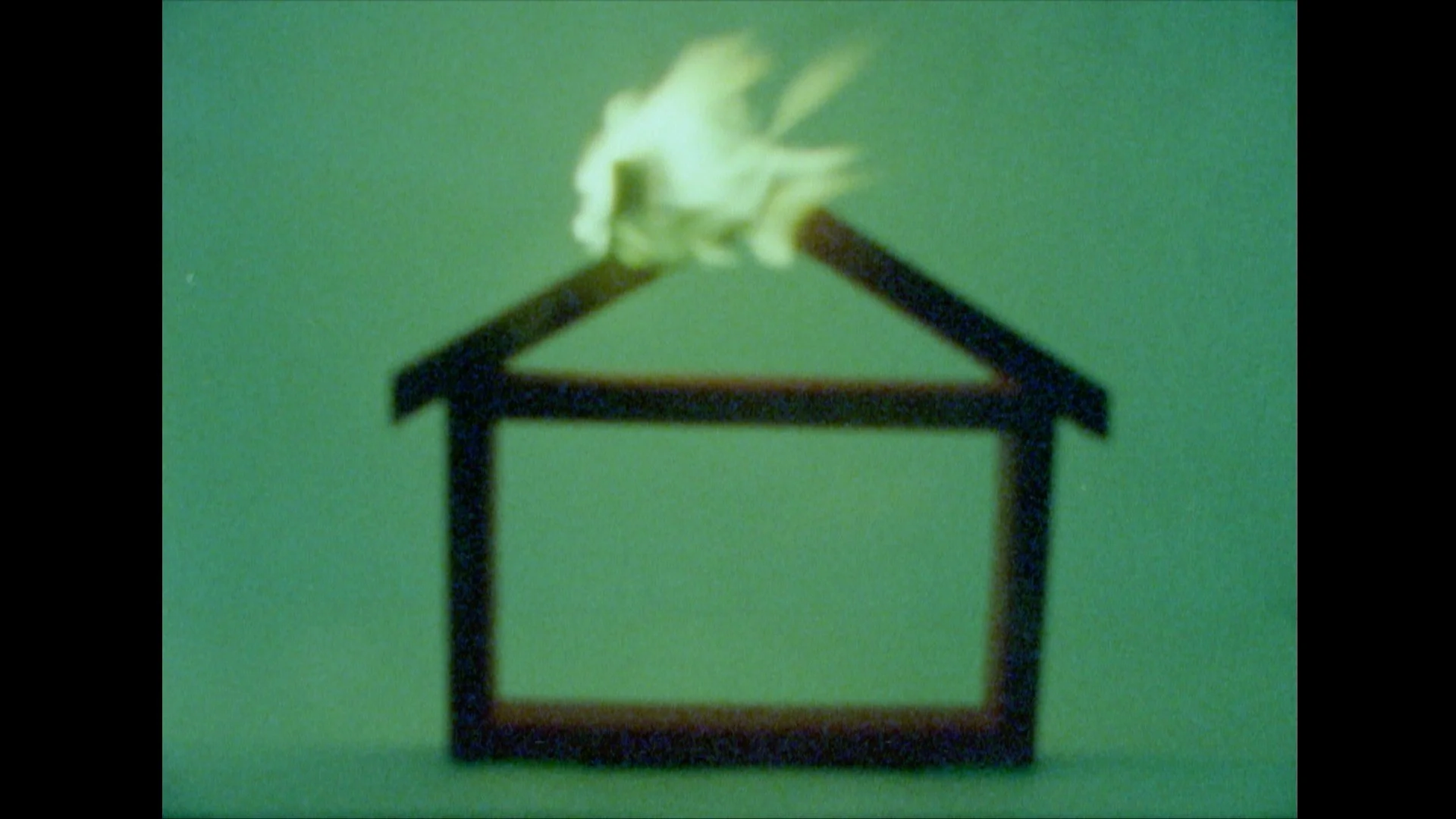
Still from A Faded Tropic. Dir. Valentina Alvarado Matos, 2016.
*
As mentioned, this essay grows out of a curation process, which now tries to expand and reconfigure those curatorial reflections into a broader critical exploration of Caribbean images, diaspora, and anti-colonial cinematic memory. It is an attempt to move from programming toward writing, from the constellation of films toward the relations that become visible between them, and from the act of selecting images toward asking what kinds of political and affective geographies they might allow us to imagine.
This piece was written before the outcome of Colombia’s presidential election in June, 2026.
I am grateful to Marina Díaz López and the Instituto Cervantes team for the freedom and trust that made this process possible, and to Carlos Muguiro, Director of the Elías Querejeta Zine Eskola, for the invitation. Also, specially, to the filmmakers whose work gives this constellation its body, memory, and territory. Their films have opened a possible deep breath: a way of taking in air, listening, and returning to the image. May these images and sounds continue to find hills from which to respond, imagine, and resist.
References
[i] Grace Nichols. I is a Long-Memoried Woman. London: Karnak House, 1983.
[ii] France 24. “Matanzas por deporte y asesinatos por teatro”: pescadores del Caribe en jaque ante ataques de Trump. February 19, 2026. France 24
[iii] Tina M. Campt. Listening to Images. Durham: Duke University Press, 2017.
[iv] Sanogo, Aboubakar. “The Indocile Image: Cinema and History in Med Hondo’s Soleil O and Les Bicots-Nègres, Vos Voisins.” Rethinking History 19, no. 4 (2015): 548–568. https://doi.org/10.1080/13642529.2015.1063236.
Filmography and Directors of the Curatorial Program
Program 1: “Listening to Images”
Listening to Images (Maica Gugolati, 2025)
Program 2: “We Never Leave Entirely”
Guanabacoa: Chronicle of My Family (Sara Gómez, 1966)
Wandering Song (Génesis Valenzuela, 2022)
To My Father (Miñuca Villaverde, 1973)
Banana Plant (Claudia Claremi, 2024)
Solastalgia (Violeta Mora, 2022)
Can You Spell the Leaf? (Valentina Alvarado Matos, 2021)
Program 3: “Walking in the Dark”
Oscurana (Violeta Mora, 2025)
La Bonga (Canela Reyes and Sebastián Pinzón, 2023)
Program 4: “The Memory of Gesture”
Fire (Elena Pardo, 2002)
Offering (Azucena Losana, 2023)
The Making (Daniela Cano and Joserraúl Ortíz, 2024)
Earth (Elena Pardo, 2005)
Faded Tropic (Valentina Alvarado Matos, 2016)
Inside We Are Color (Elena Pardo, 2024)
Private Collection (Elena Duque, 2020)
The Memory of Fruits (Claudia Claremi, 2023)
Raising an Island (Valentina Alvarado Matos, 2017)