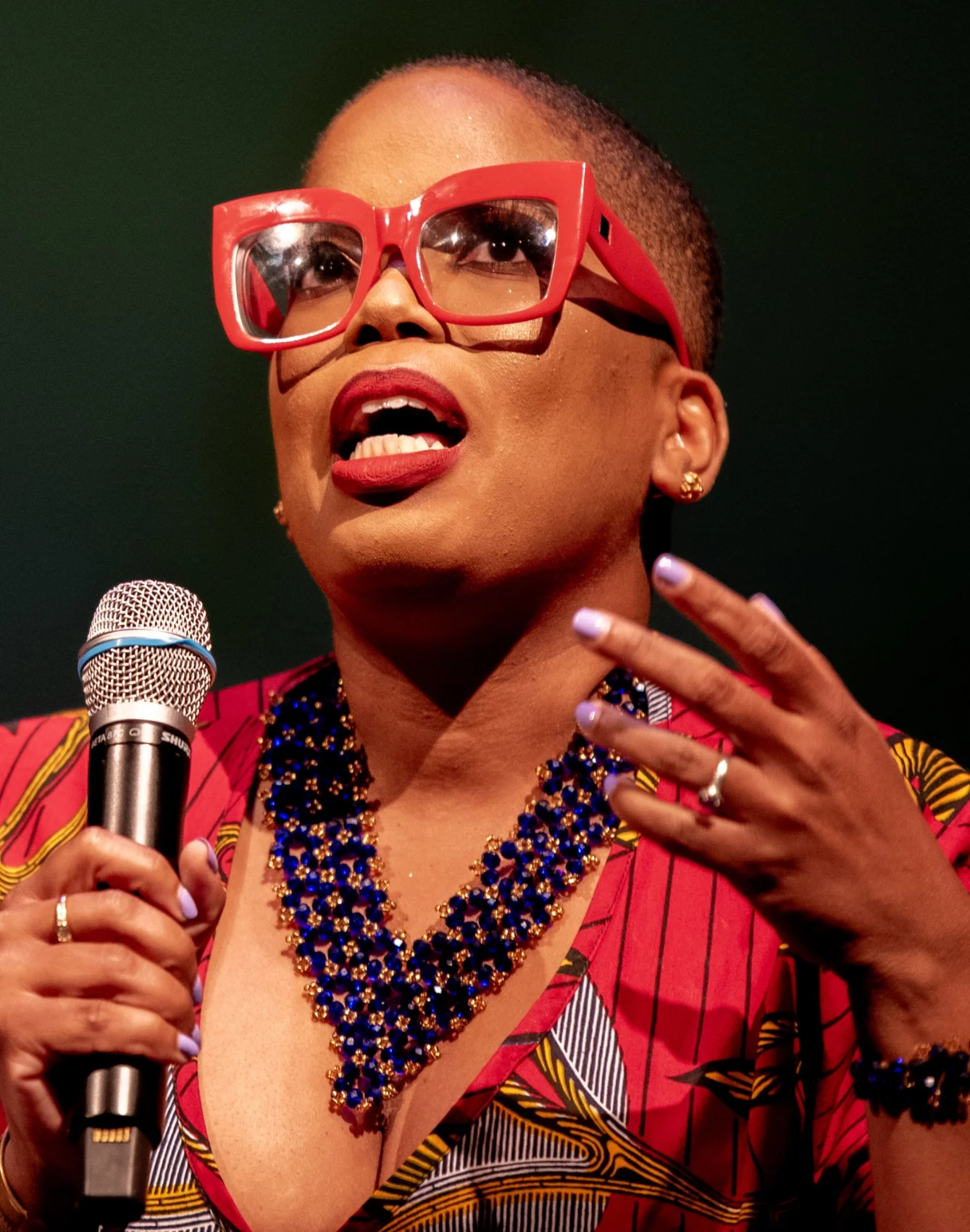
Photo of Dr. Tonya Haynes.
On April 30th, 2024, Intersect Antigua-Barbuda hosted its first virtual teach-in titled “Caribbean Feminist Possibilities,” facilitated by Dr. Tonya Haynes. Eighty-two people registered, including folks from Guadeloupe, Haiti, Jamaica, Martinique, Sierra Leone, Barbados, Puerto Rico, Antigua and Barbuda, Belize, The Dominican Republic, Zimbabwe, South Africa, among other countries, and a significant number of those who registered attended, resulting in a highly interactive and enlivening virtual convening on Caribbean and diasporic feminist solidarity and thought.
In this interactive session, Dr. Haynes engaged participants to examine the liberatory possibilities of Caribbean feminist thought and praxis through the work of key feminist thinkers, scholars, and activists.
Dr. Hayne’s Key Inquiries
What are Caribbean feminisms?
What are the radical possibilities of Caribbean feminisms?
When and why do/have Caribbean feminists retreat(ed) from those radical possibilities?
Do Caribbean feminisms confront their historical exclusions?
Is Caribbean feminism an elite project which requires letters behind your name (as one young activist said to me)?
Do we have the kinds of Caribbean feminisms we need for these times (of genocide, unrelenting sexual and gender-based violence, climate change, threats to queer and trans life and liberation, anti-Blackness, racial capitalism, Indigenous dispossession, etc.)?
In this teach-in, we discussed the importance of Indigenous cosmologies and anticolonial Caribbean feminist knowledge in conceptualising different ways of being human, in a departure from Western Enlightenment’s overrepresentation of a highly exclusive instantiation of the human, and its negation of Others, through the work of Andaiye, Honor Ford Smith, and Sylvia Wynter.
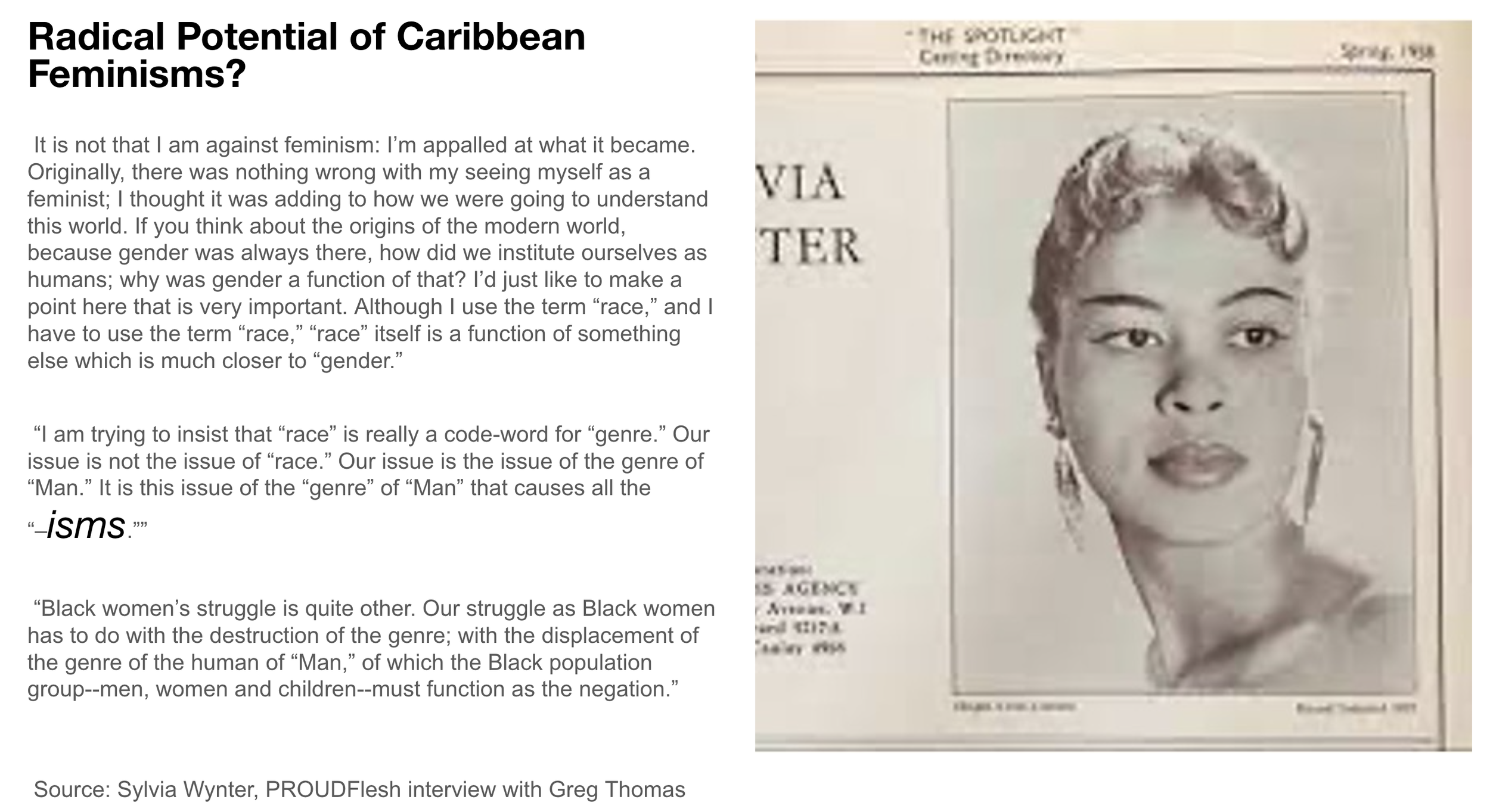
A still from Dr. Haynes’ presentation slides which are accessible below.
Key Takeaways
There are infinite ways of being human.
There is no one form of feminism.
We should be wary of Caribbean feminist thought and concepts being co-opted by agents of hegemony and institutions seeking to maintain the status quo. This co-opting defangs and deradicalises our movements.
While currently appropriated and weaponized by far-right and anti-Black factions, DEI (Diversity, Equity, and Inclusion) has also been instrumentalized to give legitimacy to the institutions that harm people across minoritized racial differences, including Black and Indigenous people.
“There is always an excess that cannot be fully incorporated or assimilated into the dominant ways (of being human/woman) and this excess becomes apparent in ways we cannot anticipate or control.”
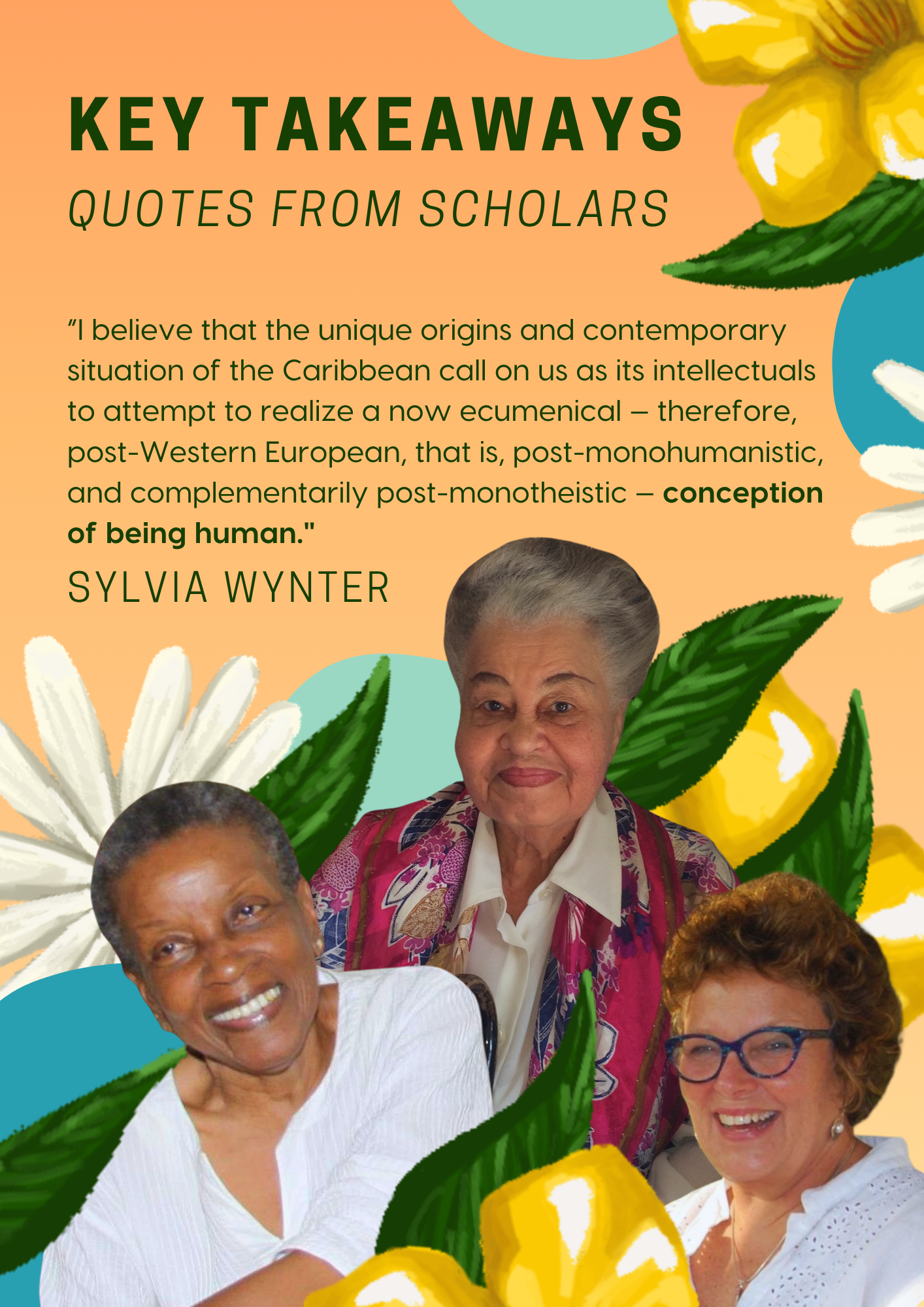
Unsettling the Coloniality of Being
Participant Reflections
“In the session, Dr. Tonya stated that feminism is a ‘livity’ and that stuck with me. The discussions surrounding the work of Caribbean feminists, its attachment to academia, and the neglect of those that are the framework of the community just reaffirmed my current exploration and journey of understanding the importance of community in not only activism work, but day-to-day living.”
— Kamilah, Sint Maarten
“I really appreciated the distinction of the regional necessity of a feminism that aligned with the Caribbean. It makes me question if my identity as a Black feminist should include a Black AND Caribbean feminism as well. I appreciate the self-reflection of the work that still has to be done w/in the Caribbean with regards to the progressiveness of the feminist identity. I'm glad that we chose to do ‘the work’ together. Particularly in a space that includes Afro-Latin folks.”
— Kay, Guyana
About Dr. Tonya Haynes
Dr. Tonya Haynes is a Caribbean feminist teacher, scholar and lecturer at the Institute for Gender and Development Studies: Nita Barrow Unit, University of the West Indies. Her doctoral students are researching women farmers’ citizenship in Trinidad and Tobago and Caribbean women’s digital lives.
She is co-editor (with Dr. Andrea Baldwin) of Global Black Feminisms: Cross Border Collaboration Through An Ethic of Care (Routledge 2023) and co-Principal Investigator (with Dr. Nicole Charles) of Diabetes and the Afterlife of Slavery in Barbados: Art, Archive and the Gendered Dimensions of Risk.
Tonya researches primarily in the area of Caribbean feminisms and Caribbean feminist thought. Her work is published in Small Axe: A Caribbean Journal of Criticism, Social and Economic Studies, Journal of Eastern Caribbean Studies, Global Public Health, sx archipelagos, the Scholar and Feminist Online.
She has led a number of public scholarship initiatives aimed at capacity building for state functionaries and community activists and inclusive policy-making with LGBTQ+, disability rights and women’s organisations.
Tonya served as co-Lead Organiser of the inaugural Gender and Development Forum at the 15th session of the United Nations Conference on Trade and Development in October 2021. In 2022 she served as a Jury Working Group Member (Care Work, Decent Work and Informalisation) of the Global Women Workers Tribunal organised by International Women's Rights Action Watch.
Most recently, she chaired the Bajan Host Committee and was a plenary speaker at the 2024 Black Feminisms Forum hosted by the Black Feminist Fund.
