Labba & Creek Water: Lessons on Revolutionary Solidarity
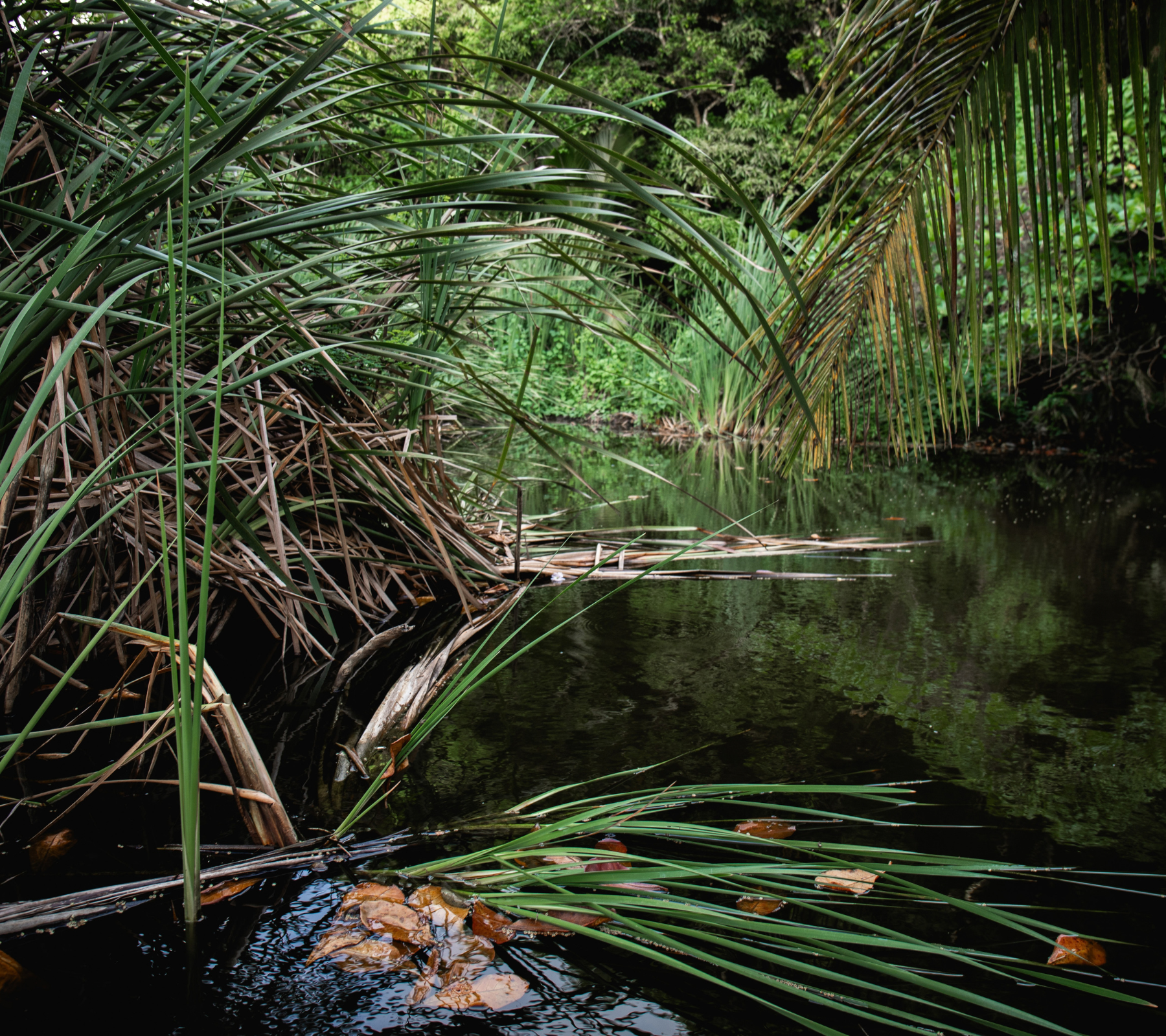
Photo by Zayne Airall, Intersect Antigua-Barbuda.
“I come long years with my pen and island huntings from where my navel string tree still grows.”
— “Island Muse” by John Lyons (1989)
The Caribbean was calling to me long before I was born. My maternal grandfather’s ancestors can be traced back to West Africa and Britain, brought to Barbados via the transatlantic slave trade and later relocated to Guyana. My maternal grandmother’s ancestors arrived from Calcutta, India as indentured servants in the late 1800s. My mother was born and raised in Georgetown. My father’s family, originally from Sindh in present-day Pakistan, settled in St. Thomas, USVI after generations of migration through tourist economies across Asia, Africa, and North America. When my parents met at Boston College in the 1980s, their shared ties to the Caribbean brought them together. Looking back, colonization, caste, and capitalism may have been the real matchmakers.
I was born and raised in Silver Spring, MD. Growing up, we spent time in St. Thomas and I remember humid days sitting idly in my family’s jewelry shop, visiting Magen's Bay and driving up terrifying, winding mountain roads. I never touched down in Guyana as a child for many reasons, primarily because many who had fled experienced political upheaval, violence, and trauma. And for those chasing an “American Dream,” going back felt unaligned. But we had Guyana at home, as best we could, through our late maternal grandmother who was a walking time capsule and told stories daily about her life back home.
In 2025, I visited Guyana for the first time with my family. That experience, coupled with research completed through the Bandung Residency and a lifetime of lived experience, have offered me a richer perspective on what revolutionary solidarity can look like in practice today. I share some of these reflections with you all, acknowledging that this essay is just one moment in time. It is not meant to encompass all of Guyana's history, every revolutionary lesson from the region, or my family's entire ancestry. If anything, it raises more questions than answers. There are more people to talk to, books to read, poems to sit with, ancestors to pray to, and humid archives to dig in.
When histories are deliberately erased, we must work harder to preserve them. The lessons that follow are not linear or finite but part of an evolving web of interconnected truths spanning time and place. I hope you enter into conversation with them, bringing your own undeniable experiences and ways of seeing. Together, we can create truth, a prerequisite commitment to building solidarity.
Lesson 1: Embrace Complexity + Reject Ambiguity = Receive Clarity
“Autoethnography opens pathways for reimagining traditional constructions of kin and relatedness.”
— Oneka LaBennett (2018)
Many years ago, I made a post on social media about my Indo-Caribbean heritage. My older cousin commented, asking why I did not also discuss my Afro-Caribbean heritage stemming from my maternal grandfather’s ancestry. I didn’t, simply because I didn’t know about it. I had always thought my grandfather was at least partially, if not fully, Indian. Immediately curious, I started calling family members and asking questions. I came to understand that my grandparents, married in Guyana in 1949, had an interracial marriage with my grandmother being Indian—from indentured ancestries—and my grandfather being Afro-Caribbean, with ancestry tracing back to West Africa and Britain, and tied to the transatlantic slave trade. They were lovingly married until he passed away eight months after I was born in November, 1995. Unlike my older cousins, I didn’t grow up with my grandfather, but through stories I knew all about his grit, ambition, love, and kindness. Just nothing about his race. Only toward the end of my grandmother’s life, with adequate prodding, did she share more about the realities of interracial marriage in her time.
The silence surrounding my grandfather’s ancestry is attributed to a perseverance of anti-Blackness & white supremacist ideologies, a perception that ambiguity over complexity equals safety, as well as a lack of knowledge about our own family tree beyond a few generations back. Either way, my grandfather’s ancestry was not taught to me as a child, or uplifted as a point of pride, like being Indian or Guyanese was. Yet, once I began asking questions, the history was not buried deeply at all. It was as if family members had been waiting to be asked. In recent years, it has been affirming to discuss race and identity with family. Little by little, we slowly shifted the culture around what is silenced, as well as what is imperative to plainly name.
I vulnerably share this abreviated bit about my family’s ancestry, because I feel that while Guyana is in many ways defined by its ethno-political conflict, it’s also home to a vast collection of complex interracial connections and intimacies from which the most personal and painful of transformational healing processes can open a path to cross-racial solidarity.
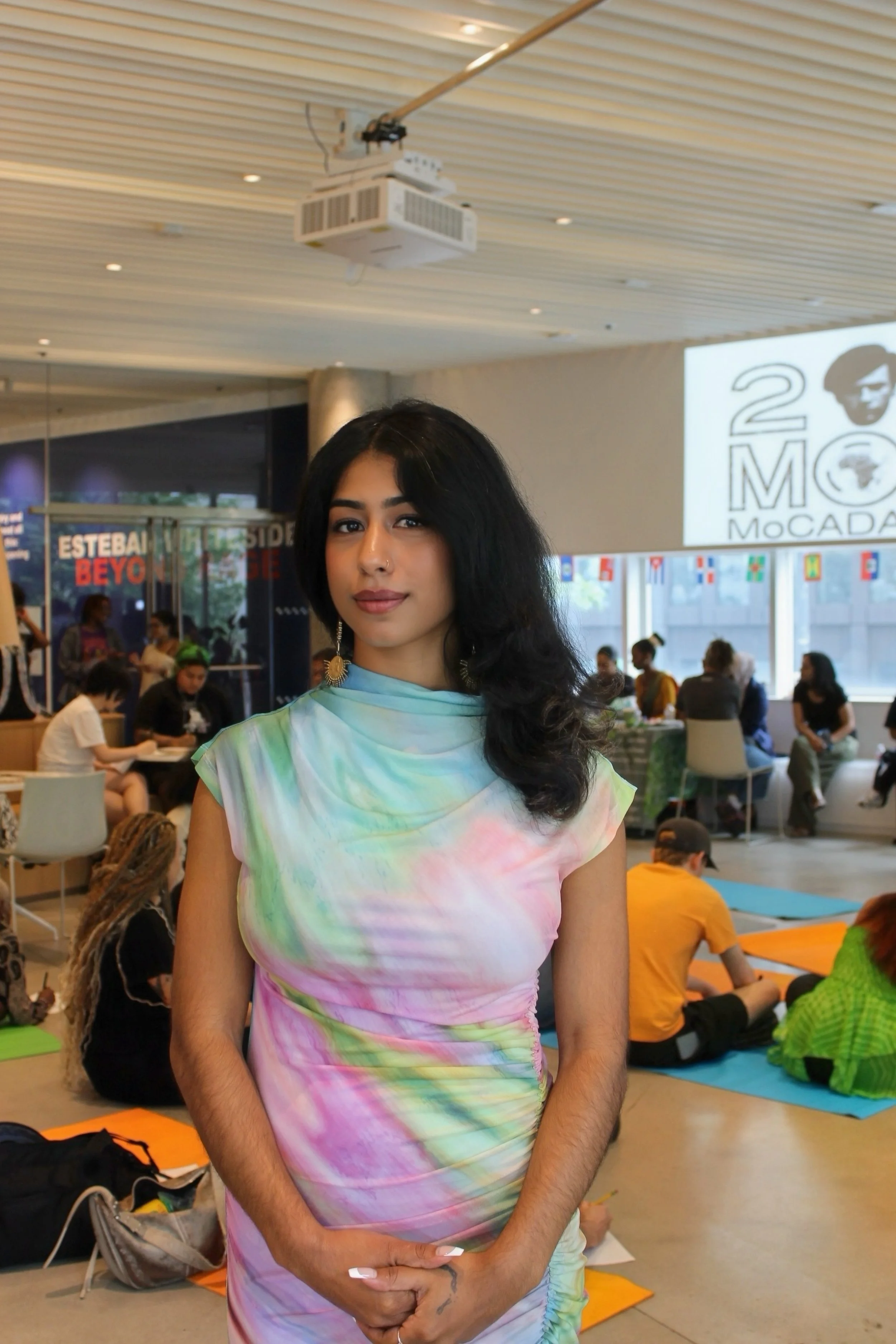
When I began researching race and solidarity in Guyana’s history during my time in the 2024-2025 Bandung Residency cohort, I knew I wanted to reread The Goundings With My Brothers by Walter Rodney. The residency, stewarded by the Asian American Arts Alliance and the Museum of Contemporary African Diasporan Art, provided resources to a group of cultural workers in New York City working to build solidarity across Asian and Black communities. My project revolved around building solidarity across the Indo- and Afro-Caribbean communities in the city through healing arts, decolonial political education, and intersectional gender justice. Walter Rodney, as a Guyanese Marxist, historian, political activist and academic, was one revolutionary I knew I wanted to inform my work. He joined the Working People’s Alliance (WPA) in 1974 and emerged as a leading figure in the resistance movement against the increasingly authoritarian People's National Congress government. In The Groundings with My Brothers, he shares one of his strategies for bridging racial divisiveness in Guyana. It was, in true applied Marxist methodology, to build class solidarity by unifying the working class who he viewed to be African and Indian. Linguistically, Rodney referred to both Africans and Indians in Guyana as Black, reflecting that in the white man’s eyes they are one and the same, that poverty lay acutely within both groups. This strategy galvanized energy, and he was able to physically bring people out in support of their countrymen regardless of race. While I believe this strategy would be ineffective in an American context, as racial context shifts based on localized histories, I believe through his work he was able to expose complex realities of race and class that lead to clarity on mobilization strategies. When applied to today’s multiracial Caribbean community, what can we learn? What complex, painful realities can create a path towards cross-racial, cross-class solidarity? What galvanizing language of solidarity can emerge? What gaps in his strategy can we identify and fill?
Though experimental and revolutionary, various factors at the time led to the WPA’s decline, including Rodney’s assassination in 1980. His contribution to decolonial Marxist thought, pan-Africanism, and grassroots organizing are undeniable, and one cannot imagine what he may have accomplished had he lived. But like in many revolutionary movements, the WPA centered the men, while women were often laying the necessary groundwork for revolution while carrying out reproductive labour within communities. Women, children, and queer people are also those who, when violence breaks out, are most harmed and are often used as pawns in conflicts carried out on the surface by men.
Lesson 2: Revolution Blooms in Transnational Groundings with my Queeribbean Survivors
Andaiye, a Guyanese social, political, and gender rights activist, was also a Black woman leader in the WPA. And while many in the Caribbean know of her legacy—not enough do globally. One of her many gifts to Guyana was her co-founding of Red Thread, a women’s empowerment organization that began on the basis of multiracial working-class women embroidering items together, to then sell and earn. More earning meant more independence and autonomy, a more decent quality of life, and less willingness to tolerate violence from men. Red Thread didn’t begin their first conscious-building project until their second year in operation, Andaiye shares in Spitting in the Wind’s “Red Thread Story” published in 2000, but, once they began building oral history projects, they were extremely successful. They documented the lives of women sugar workers, and eventually Red Thread members were bringing their organizing methods and artisanal goods to other nations in the Caribbean.
“The reason we bring all races together is that we are aiming at one thing: the rights of women.”
— Christina James, Red Thread member from Linden, Guyana.
Andaiye learned from other movements like the New Jewel Movement in Grenada, and as a Caribbean Marxist but also a Black feminist (though she contested the label and politics of “feminism”), she critiqued the way women, children, and Indigenous people were treated within the WPA. As she laments in her book of essays, The Point Is To Change The World, it was imperative to uplift and expose the layers of women’s invisibilized labour if they were to create a true revolution. Until her death in 2019, she continued her work writing on race, class, and gender in the Caribbean.
Rodney described grounding with his brothers as engaging in grassroots conversation with the people, dissolving the confines of academia and recentering truth and wisdom amongst those closest to social issues. He was prepared to be literally anywhere people would sit down, talk, and listen. As he grounded with his brothers, and as Andaiye grounded, in a sense, with her sisters, I reflect on what my experience has been grounding with my queer siblings.
In 2017, I founded a zine-making collective called SPICY by and for queer and trans artists in New York City. Together, we meet up to make art, critique capitalism, radically accept and affirm each other, fundraise money for community initiatives, feed each other, and support each other. In 2019, I joined Jahajee, a movement-building organization based in Queens, NY, led by and for Indo-Caribbean women and queer survivors of sexual assault with the aim of ending cycles of gender-based violence in our community. To be affirmed and seen in these spaces in ways that my family had not been able to—in my survivorship, my queerness, my creativity, and my wholeness—was life-saving. Generations of silence broke, and again, little by little, culture is shifted to create new language and pathways towards solidarity built on shared truth. In the most painful, intimate, hurt places within our bodies and psyches, there is a door to building solidarity.
In 2022, I was one of the few people in the Caribbean diaspora to attend a multiracial gender justice conference in Jamaica. Together, we sat in a circle, cried, made art, discussed gender-based violence, climate disaster and its effects on women, queer people, and children, and accessible ways to get crucial communication to the most isolated and vulnerable in our communities. I left the conference with a fresh realization: a lot of diaspora kids have a massive ego that incorrectly masks itself as imposter syndrome, which leads to a selfish block when it comes to truly connecting with their roots in a way that builds solidarity, truth, and reckoning. Of course, our lived experiences are different. And of course, it’s imperative that as someone with an American passport I do not step in a room without checking my privilege. But, I learned that there is far more opportunity for mutual aid and connection between those in our homelands and those in the states if we make space for it. As we build solidarity, we can support folks' desire to seek asylum, access resources in the states, and we could fundraise for their life-giving causes. On the other hand, they can show us our ancestral homes in ways family could never, in ways our queerness is seen and our safety is protected. Solidarity is not transactional, but it is showing up with gifts and offerings when possible. It is accepting that what some may call an “inconvenience” is the price to pay for solidarity.
It’s in these queer spaces, from New York City to the Caribbean, where I have experienced true solidarity among people, that I understand the importance of chosen family, of community, and of what can happen when you don’t actually have solidarity with anyone. To understand the dire need for collectivity, and that the other option could very well be death. Of the reality that our bodies are that which every war has passed, even and especially wars we did not start. I didn’t choose to be queer, and I didn’t choose to be a survivor, but I now choose every day to affirm my identity as a connection point. Queerness is not inherently revolutionary, but my queerness has led me to places where I have seen revolution bloom before my eyes.
What would happen if all organizers, regardless of sexuality or gender, looked towards and supported our working class Queeribbean leaders and organizers as the blueprint on how to build solidarity, shift material conditions, and mobilize fiercely with radical acceptance, love, and joy?
“Queerness is not inherently revolutionary, but my queerness has led me to places where I have seen revolution bloom before my eyes.”
Lesson 3: Take Responsibility for Your Healing
“On that mad ocean, when all was tossing, people’s heads were spinning, and then labor pains started for her to have her child, on that mad ocean I came to life.”
— Indian woman born on ship to the West Indies in 1888, as quoted in Coolie Woman: The Odyssey of Indenture by Gaiutra Bahadur (2013).
Did you know an ant colony has memories that individual ants do not? When I was in Guyana, I remember that each car ride, nighttime chat, meal, and empty space was filled with my mother and her siblings stringing together memories that in my thirty years, I’d never heard. The way their stories bounced and built was electric: So-and-so had story... this is where yuh mudda fell in the sucksand... yuh grandfather used to work right here... this is where he was hit by the cyar... we would fete here... etc. Guyanese storytelling is its own fine-tuned, unique technology that even if I tried I couldn’t emulate. When she was alive, my grandmother would tell jokes and stories that felt rehearsed, and technically maybe had been because in her 70s-90s she was probably retelling a joke that she first told when she was 35. She would sit cross-legged, one arm crossed and the other at her chin, all the gold bangles and rings gently clanging while she spoke.
She used to set the scene, describe the normal goings on, furrow her eyebrows as the anomaly arises, and then get quiet...only to come out with the punchline all of a sudden, and before she laughed at her own joke, she would look at you and confirm you got it too; a tried and true technique I believe she passed onto her four children. But on this trip, maybe because I’m older now, I realized something about this storytelling technique that I never had before. In the post-joke chuckles to silence, a heaviness would often creep up. A feeling of something potentially unsaid. I would ask, “And so where is this person now?” And something painful would be revealed—the person in question may have died tragically, and their store may have burnt down in riots.
I was reminded how grief and trauma persist over time and can often be buried amidst sweet nostalgia; how telling these stories and jokes allow for a heavier silence to emerge where a group can grieve together, and continue onward. This is healing. In these intimate, listening moments our spirit seeks out connection. The colony of ants remembers things its individuals do not, because they can’t bear history alone.
In our organizing work it is imperative that we prioritize healing in collectivity, not just in 1:1 therapy, alongside action. In order to be in solidarity with each other, we have to build capacity to understand someone’s struggle outside of our own. To affirm that acknowledging someone else's journey does not take away from ours. And this shift is rooted in healing from a scarcity mindset to be in one of abundance—work I began doing with my mentor Taij Kumarie Moteelall in 2019.
A scarcity mindset is one that white supremacy and capitalism has forced onto us. It’s rooted in the thought that there is not enough, that there will never be enough. That we are not enough. And this doesn’t just pertain to money—this pertains to self-worth, success, love, and friendship. A scarcity mindset tells us to hoard all of our skills and resources, and not share or redistribute them. A scarcity mindset is what makes us envious when our friends win because we believe there is only so much to go around. But that’s a lie. With a scarcity complex, we cling to the crumbs that the ruling class gives us, and we never dare question it. A scarcity complex was the motherly voice in the back of my head telling me to keep my head down, work hard, and never rock the boat.
An abundance mindset, on the other hand, is the truth that there is more than enough to go around. There is enough love, enough friendship, and enough solidarity to share. An abundance mindset is community care. An abundance mindset is checking our privileges and redistributing whatever power we have because there is no need to hoard. An abundance mindset is abolition. An abundance mindset is socialism. It is abolishing binaries and leaning into the infiniteness of the human experience. An abundance mindset is taking risks because I am not alone and my community will be there to catch me when I fall. An abundance mindset is a solidarity economy. An abundance mindset is seeing failure as integral. It’s sharing my last with you. An abundance mindset is restorative justice.
Building our movement base and turning out more bodies at protests is necessary, and at the same time I do not believe we can tear down these current structures and rebuild anew if we haven’t embarked on a healing journey in our personal lives. We cannot be unprincipled, abusive, unaccountable, and most importantly, unchecked in our personal relationships and think that our public images as organizers, artists, workers, or community members will thrive untarnished. This is why so many organizing spaces and social justice nonprofits are sites of exploitation, abuse of all kinds, traumatization, and harm. It is also why you always have grifters and clout chasers who attempt to show solidarity with revolutionary movements then sell out and choose to profit off genocide and death at the first given chance.
If it is in our collective healing that our capacity for solidarity grows, and if solidarity is what we need to build cross-racial and cross-class movements to reaffirm life and defeat fascism, how will you take responsibility for your healing?
“An abundance mindset is abolition. An abundance mindset is socialism. It is abolishing binaries and leaning into the infiniteness of the human experience. ”
Lesson 4: Our Enemies Lack Creativity
“It will soon be dawn, with fire-stoked horses thundering to the humming sky of crickets. I will see you run. And I will run with you.” — Oonya Kempadoo, All Decent Animals (2013)
As I drift back to “now,” I think of the Exxon tankers off the coast of Georgetown, Guyana. I think of the U.S. government's attacks on immigrants, queer and trans people, bodily autonomy, and Indigenous sovereignty. I think of the New York Police Department's militarized presence in the subway, criminalizing working people. I think of those I cannot see, disappeared in jails and detention centers. I think of deadly flooding from Hunt, Texas, to Queens, New York. I think of the ongoing genocide in Palestine, the death-obsessed sickness of Zionism that has spread across the world, and the ongoing femicide across the Caribbean.
During a teach-in titled “From the Jordan River to the Caribbean Sea: Building Solidarity,” organized by Feminitt and others, it was shared that one way Caribbean people can stand in solidarity with Palestinians is to:
“keep telling our stories, sharing other stories, putting a voice to how these are connected, using our storytelling to imagine and build a world where we aren't talking about entire communities, cultures, lives and societies in past tense.”
The organizers went on to share:
“In entirely distinct ways, Caribbean peoples and communities were and are subject to vast efforts in erasure, wiping out entire histories to preserve a certain social order—what kept our resistance together, a Caribbean trajectory even amid brutal fragmentation, was how we told our stories.”
The forces we are up against are not particularly imaginative. Their fascist playbook repeats itself across generations: extraction, division, disappearance, dispossession. What endures is our capacity to respond with creativity, resourcefulness, action, and collective care. The Caribbean has long been a site of experimentation—not only for empire, but for resistance. As difficult and imperfect as it may be to build solidarity across differences, we must continue trying. Women, queer people, Indigenous communities, working people, and the earth itself will continue to bear the brunt of imperialism, climate catastrophe, and late-stage capitalism if we do not.
When I was in Guyana, we spent a day on the Kamuni Creek with the Indigenous community that stewards the land. My uncle told me that people in the interior say, “If you eat labba and drink creek water, you will always return to Guyana.” Upon hearing this, I realized I had already done one of the two when my canoe capsized earlier that day. I hope to complete the ritual the next time I touch down, but perhaps the saying isn't just about returning to a place. Perhaps it's also about returning to a responsibility: to remember, to tell the stories, to deepen our relationships, and to keep practicing solidarity even when it is difficult. If Guyana has taught me anything, it is that survival is collective, memory is a living archive, and the Caribbean is no one’s backyard.